When my daughter started doing her band routine, external rotations, rows, all the usual “shoulder maintenance” stuff. I honestly thought the exercise band Pull‑Apart sounded like a fluff exercise. The afterthought. The warm‑up to the warm‑up.
Then a month went by.
And something was… different.
Her arm didn’t dip at the end of the game. Her posture didn’t collapse forward when she got tired. Her release stayed crisp. She looked stronger, not in a showy way, but in the quiet “my body is finally doing what it’s supposed to do” way.
It took me embarrassingly long to realize the pull‑aparts were doing more than any of us expected.
We added these to the 5 exercises daily she does with exercise bands. Since she started the routine, her pitching has gone to the next level.
If you haven't picked up exercise bands yet, you can get them at any sporting goods store or pick them up from Amazon for cheap.
The Routine That Looks Too Easy to Matter
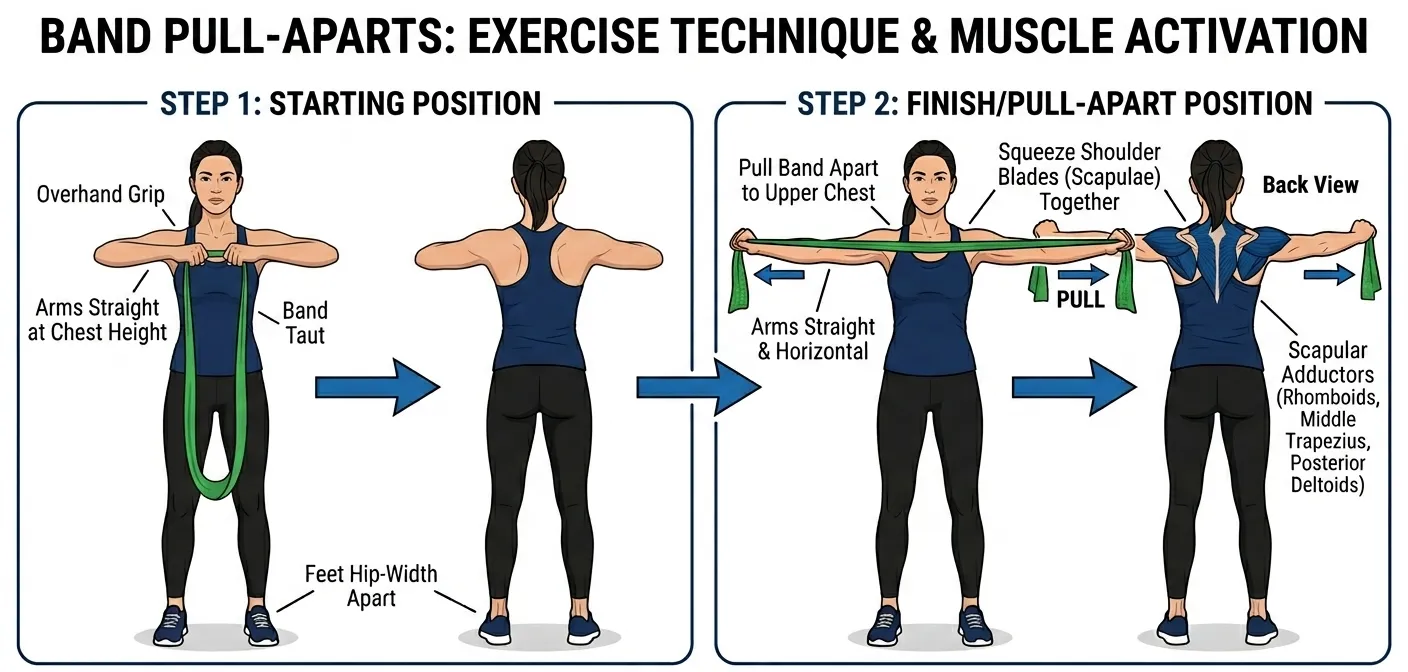
You hold a band out in front of you.
You pull it apart.
That’s it.
Except it’s not. Not when a pitcher does it correctly.
When my daughter’s coach broke it down, he said something I still think about:
“Pitchers collapse forward because no one trains the muscles that hold them upright.”
And that’s exactly what pull‑aparts strengthen those mid‑back, shoulder‑blade‑anchoring muscles that never show up in Instagram workout videos but quietly decide whether a pitcher is stable or sloppy.
These tiny muscles, rhomboids, mid traps, and rear delts don’t scream for attention like quads or biceps. They keep the shoulder blades from drifting forward like a wilted plant. And when they’re strong, the pitching motion stays centered instead of compensating.
What Started Happening After She Added Them
The improvement wasn’t a lightning bolt moment. It was slow, subtle, and then suddenly obvious.
Her drives got cleaner.
Her posture between pitches is less rounded, more commanding.
Her shoulders didn’t “droop” on long days.
And the big one: fewer complaints of that annoying fatigue at the top of her shoulder.
I kept waiting for regression. It never came.
It wasn’t magic. It was mechanics, finally supported by the muscles that make mechanics possible.
How She Does Her Pull‑Apart Routine (the real version, not the pretty Instagram version)
Her coach gave her one rule: No cheating.
Meaning no elbow bend. No leaning back. No snapping the band like an angry slingshot.
She stands tall, arms straight out in front, and pulls the band apart until it touches her chest. Slow on the way back, because that’s where the real work happens. When she gets sloppy, she switches to a lighter band.
It’s not glamorous. But it’s ruthlessly effective.
How Many? How Often?
Here’s her exact setup, the one that actually produced results:
Her coach had her start with:
- 2–3 sets
- 12–15 reps
- Light band. (The second the form gets sloppy, she switches to lighter)
- Slow tempo. Seriously, slow is where the magic happens.
It was the consistency that made the difference, not the intensity. Every. Day.
If her shoulders are fried from a tournament weekend, she still does them just slower. It’s more recovery than a workout at that point.
What surprised me most?
Not how strong she got, but how balanced she became. It made all the other band work external rotations, rows, and diagonals actually stick. Like the pull‑aparts were the glue, the whole routine was missing.
Check out all 5 exercises she does with bands below: