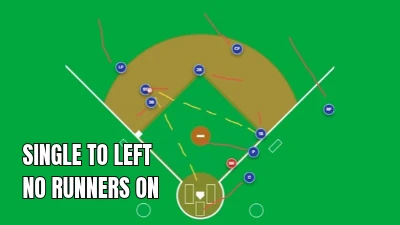
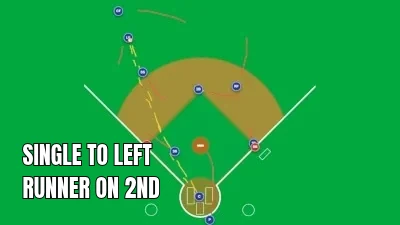
Single To Left Field With A Runner On Second Base: Defensive Responsibilities
This article was mainly written for high school or older kids. Some advanced little league or travel teams may be able to use this as well. It really depends on the strength of your outfielders' arms.
This play was developed by watching #2 North Hall vs #11 Cherokee Bluff. There are alternate variations of this play.
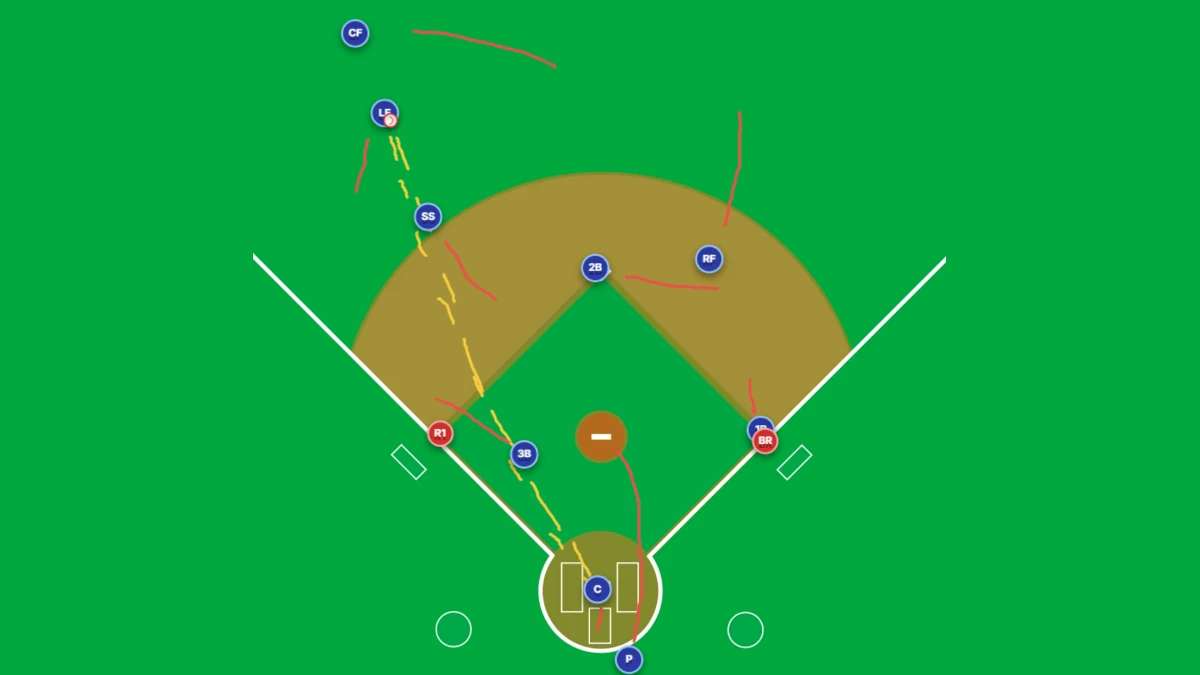
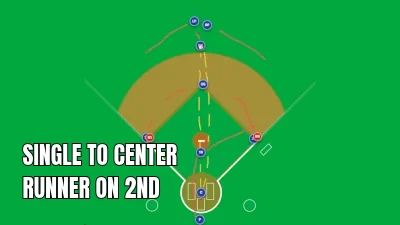
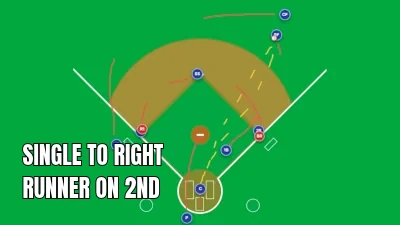
On a ball hit to left field with a runner on second base every player has a job to do. This is one of the most complex plays in baseball due to all the moving pieces.
As a general concept, on a ball hit to the outfield we are thinking two bases ahead of the lead runner. With the lead runner on second we are thinking home plate.
Play Responsibilities
| Position | Primary Responsibility |
|---|---|
| Shortstop | Align as cutoff in shallow outfield. |
| First baseman | Cover first and make sure runner touches the bag. |
| Second baseman | Cover second in case play develops to 2nd. |
| Third baseman | Between ball and home plate in infield grass or cover third base. |
| Pitcher | Back up home plate. |
| Catcher | Cover home plate. |
| Left fielder | Fields ball and throws directly to home plate. |
| Center fielder | Back up the left fielder based on the ball's direction. |
| Right fielder | Provide backup behind 2nd base. |
Left Fielder (LF)
Call for the ball when able to make the play safely. The center fielder generally has priority over the corner outfielders.
Throw the ball directly to the home plate on a line. Throw through the cut-off man so he can cut the ball off if needed.
If the center fielder calls the left fielder off, then the left fielder should move behind where the ball will drop to get the ball on a hop or two.
Center Fielder (CF)
Center fielder should start by moving towards the ball. Center fielder has pop up priority but if the center fielder can't get to the ball in time they should be moving more behind the left fielder to grab the ball on a hop or two.
Infield Positioning: Shortstop
The shortstop is typically cutoff man on a hit to left field. Move to shallow left field between the ball and home plate.
If the throw goes to home plate (past you), move to cover third base.
The cutoff should relay the throw toward home when appropriate, let it pass when a play at home is still possible, or redirect it when the lead runner is no longer a realistic out and another play is available. The catcher and cutoff must communicate.
If the Player Scores
If the player on second scores you are staying put. You should be relaying to the left fielder where the play is developing too but you can't move in case the left fielder does not hear the update.
Infield Positioning: 2nd Baseman
The second baseman is covering second base and preparing to receive the ball from the left fielder, cutoff man, or catcher depending on how the play develops.
Infield Positioning: 1st baseman
The first baseman is covering first base. The first baseman should verify the batter touches first base.
Infield Positioning: 3rd baseman
The third baseman is moving to the infield grass as a cutoff option.
Once the runner on second tags home plate you are moving to cover third base.
Pitcher
The pitcher is behind home plate as a backup.
The pitcher should also be ready to join in a rundown situation, if the batter is caught off the bag.
Catcher
The catcher is covering home plate.
Your primary job is to receive the ball and keep the runner on second from scoring.
Right Fielder
Move to backup 2nd base. Your location changes when the balls location changes.
Outcomes
| Outcome | What happens next |
|---|---|
| Fly ball caught | If the runner attempts to advance to third after tagging up, the left fielder can throw to third base. Third baseman or shortstop must cover bag. |
| Ball drops safely | Runner on second may try for home. Outfielders field the ball, and the infield executes its cutoff and base-coverage assignments. |
| Ball rolls past the left fielder | Center fielder retrieves the ball, and the infield executes its cutoff and base-coverage assignments. |
| Throw to home is off target | Shortstop or third baseman attempts to gain control. If shortstop misses, third baseman and pitcher attempt to stop the ball and prevent the runners from advancing. Shortstop or 3rd baseman cover 3rd after ball is past them. |
| Base runner gets caught between bases | Fielders communicate and execute a rundown, with other defenders covering first and second bases. |
How To Teach The Play
- Start by whiteboarding out the play or sharing this webpage with every member of your team.
- Move into drills where every player is at their respective positions. Hit the ball to the left fielder and watch everyone move.
- Coach any larger errors before moving into smaller areas of improvement.
- Move into pulldowns for the outfielders, and shortstop.
Practice drill: Line Drive to Left Field
Practice what happens when everything goes right but also practice what happens when things go wrong. Inform a player to make a mistake.
Queitly tell the left fielder to miss the ball or tell them to make a bad throw.
Watch and coach when everything goes right and coach when everything goes wrong.
- Focus on communication, the cutoff, and backup positioning.
- Position all nine players on the field with a runner on second.
- Hit a ball to left field and have players execute their assignments. Repeat until they get it right.
- Inform a player to make a mistake (Left fielder misses the ball, bad throw to the infield, etc.) Repeat until everyone knows what to do when everything goes wrong.
More Details On How To Use the Play Simulator
Need complete step-by-step instructions on how to use the play simulator? View Full Documentation →