I spent two years chasing "the most pop." Then my son hit a walk-off grand slam with an old bat bought from a stranger online, and suddenly none of my research made sense anymore.
He didn't win the game of baseball. It was just a random youth travel game on a random evening. The kind that most people will forget by next week.
I won't because the kid rounding the bases was my son. And the bat in his hands wasn't the shiny $400 model everyone was talking about. (And believe me, we have 4 of them he could have used)
It was an old beat-up Louisville Slugger I bought online for seventy bucks. That's when I knew I figured it out. That's when I knew I would never buy a brand new bat again.
For years, I was convinced I was doing the best thing as a parent. I've got two boys who love baseball. The kind of kids who sleep in team shirts, watch highlights at breakfast, and talk about their futures are always asking what team I'll root for if they are drafted onto different teams.
So when they needed bats, I did what every well-intentioned baseball dad does.
I researched. Late nights. YouTube reviews. Reddit forums. Articles written by people who seemed to know way more than I did.
Every search looked roughly the same:
- "Best baseball bat for 9-year-olds."
- "Bats with the most pop."
- "Best USA bat."
- "What youth bat hits the farthest?"
The answer always seemed to lead back to the same thing: Pop.
Pop was everything.
At least that's what I thought.
So we went to Dick's Sporting Goods. If you've never used one of their batting cages, they're actually pretty great. You can grab a dozen bats off the rack and start swinging.
My oldest found a bat he loved. A DeMarini UFX-22 Drop 10: $434.58.
My younger son found his favorite. An Easton ADV 360 Drop 11: $273.46.
The next year we did it again.
More reviews.
More research.
More searching for the magical bat that would unlock extra distance.
This time my oldest had moved to a league that allowed USSSA bats, so he wanted a Supra Drop 5. $370.98.
My younger son wanted the Easton Hype Fire Drop 11. $317.98.
Before I knew it, I had spent nearly $1,400 on four bats that would each last about one season before my kids outgrew them.
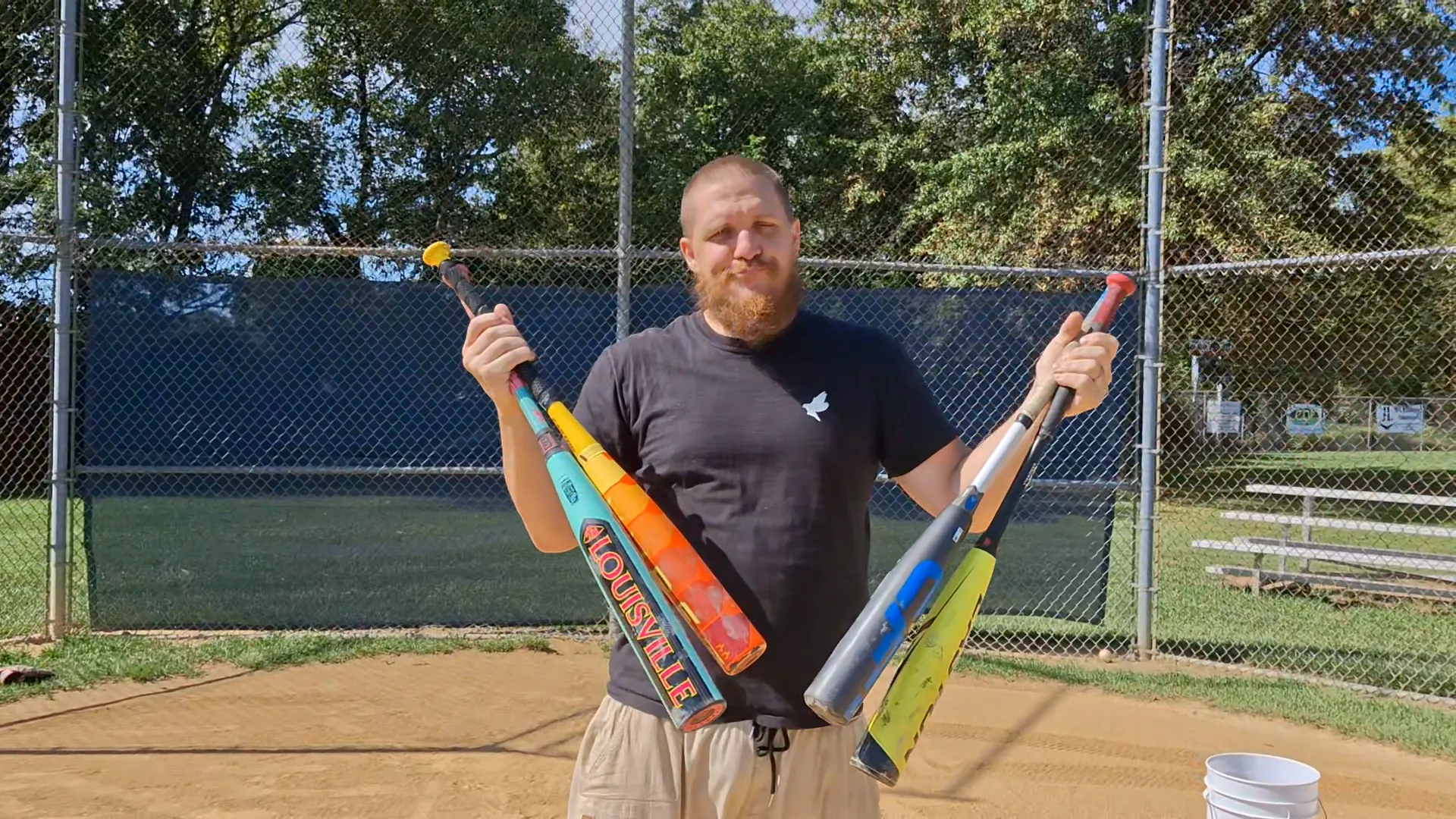
At the time, it felt reasonable. I wasn't buying bats. I was buying performance.
Or so I thought.
Then something changed. My oldest moved into a league that allowed USSSA bats.
For the first time, I started paying attention to all those certification stamps printed on the barrels.
- USA
- USSSA
logos stamped on every bat. I'd seen them a hundred times without ever asking what they actually meant.
Then I started Googling. And that's when I stumbled onto something that completely changed the way I thought about bats.
The thing I was obsessing over was regulated.
The thing I was spending all my money chasing wasn't a free-for-all.
Years ago, bat technology got so good that balls were coming off bats dangerously fast. Safety became a concern. Rules were created. Performance standards were established.
I should know; I chipped my tooth on a comebacker when I was playing Little League.

Manufacturers could change colors, graphics, marketing, feel. They could hype up every new bat they made.
But there was a limit to how much raw performance (or pop) they could build into a certified bat.
I'd spent two years chasing the one thing everyone was quietly keeping the same.
Suddenly I found myself asking a different question.
What actually matters besides pop?
The more I paid attention, the more I kept coming back to three things.
- Weight.
- Sweet spot size.
- Hand sting.
Weight Was Obvious Once I Stopped Ignoring It
A few ounces doesn't sound like much, but it matters when you're asking a young hitter to turn on a fastball.
A lighter bat swings faster.
And unlike marketing hype, weight is easy to measure.
It's printed right on the bat.
Sweet Spot Size Matters Too
Some bats are forgiving. Others felt like they demanded perfect contact.
For younger hitters especially, a larger sweet spot can hide a lot of imperfections while they're still learning.
Then there was the thing I completely overlooked.
Hand Sting
I didn't care about hand sting because I'm an adult.
My kids cared.
When a mishit rattles their hands, they notice.
They become hesitant and take softer swings. After all, pain is a way to tell yourself not to do that again.
Try convincing a kid to take a hundred swings when every fifth swing feels terrible.
It ain't easy.
What surprised me most was that all of our expensive bats still stung on mishits.
Their sweet spots weren't dramatically different either.
The more I looked, the harder those price tags became to justify.
I Changed My Search
Instead of looking for the newest bat, I started looking for proven older bats.
Bats with a reputation from years of player feedback.
Bats people kept buying even after they disappeared from store shelves.
I even used ChatGPT to help me sort through performance reviews, durability reports, certification requirements, and owner feedback.
That's when one bat kept showing up.
The Louisville Slugger Select 719.
Not flashy or trendy. Not appearing on anybody's "Best Bats of 2026" list.
Just an older bat that players seemed to love.
I found one on SidelineSwap: $70.
At that price, I figured it was worth a shot.
When it arrived, I checked it carefully.
How to Check a Used Bat
Used bats come with risk. You don't know how many swings they've already seen. You don't know how much life is left. So I inspected every inch.
Then I took it to the field. Hit balls off a tee. Moved the tee around to hit different parts of the barrel.
Listened for weird sounds and watched for dead spots.
The bat felt great.
Then something unexpected happened.
Out of all the bats we owned...
That one became everyone's favorite.
My boys kept reaching for it. Even teammates wanted to use it.
Not because it was expensive or some YouTube influencer told them to.
Not because a marketing department convinced them.
Because it felt good. It swung easily. The sweet spot wasn't generous by any means.
But their hands didn't hate it.
And then, one day, my son stepped to the plate with it.
Bases loaded and launched a walk-off grand slam.
A few weeks later, the bat broke. As I said, you don't know how many swings are left in a bat.
I ordered another one within two days.
Same model, same price, no hesitation.
Because by then I'd realized something.
The bat wasn't special because it was cheap.
The bat was special because it excelled at the things that actually mattered.
Good performance. Manageable weight. Okay sweet spot. Minimal hand sting.
Everything else was just noise.
If I could go back and talk to the version of myself standing in Dick's Sporting Goods two years ago, holding a $400 bat and convincing himself that more money meant more results, I'd tell him something simple:
Stop trying to buy more pop.
Instead, spend that money on baseballs, lessons, and cage time.
Invest in the kid, not the marketing.
Because the biggest lesson I learned wasn't about bats.
It was about baseball parents.
We're all looking for an edge.
And sometimes, in the process, we become vulnerable to the idea that the next purchase will be the thing that changes everything.
Most of the time, it won't.
Sometimes the answer isn't newer.
Sometimes it isn't more expensive.
Sometimes it's a slightly scratched-up bat sitting online for seventy bucks that everyone else scrolled past.
The Prompt To Find The Best Bat
And if you're trying to find a bat like that for your own player, here's the exact prompt I used with ChatGPT:
"Act as a youth baseball equipment expert. My child is [AGE] years old and plays in a league that requires [USA/USSSA] certification. Compare older and newer bat models based on swing weight, sweet spot size, durability, hand sting on mishits, real-world owner feedback, and overall value. Ignore marketing claims and rankings. Recommend the best used bats from the last 10 years that provide the highest value for the money and explain why."
Just swap in your player's age and certification.
You might save a lot more than money. You might save yourself two years of chasing the wrong thing.