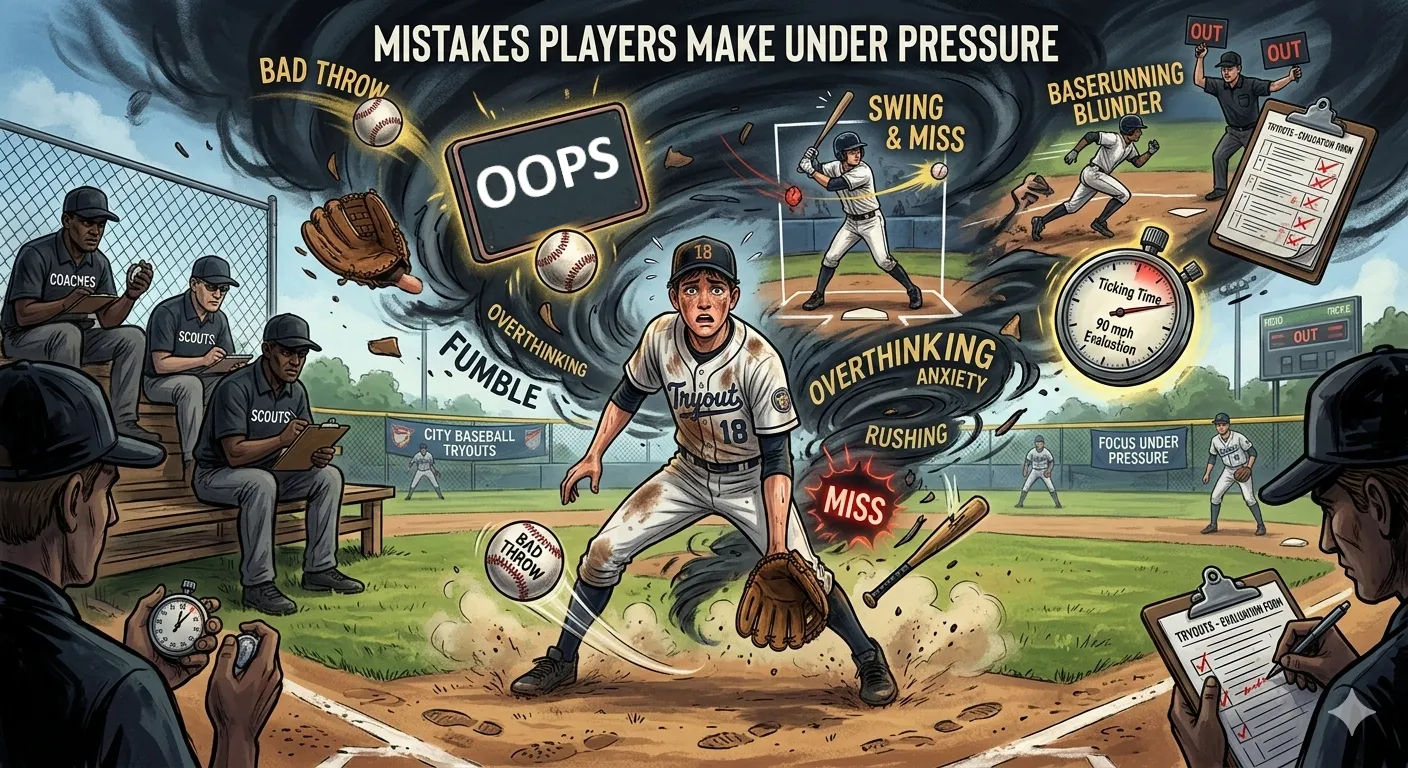
If you're a baseball parent watching your son hit one ground ball after another, you're probably assuming the problem is timing.
I did too.
In fact, I was so convinced timing was the issue that I accidentally created an entirely different hitting problem.
The frustrating part?
My son was actually making contact.
He wasn't swinging and missing. He wasn't striking out every at-bat. He was putting the ball in play consistently.
The problem was that nearly every ball seemed to end up in the same places: shortstop, second base, or an easy grounder up the middle.
That's when I learned an important lesson that many youth baseball parents never hear:
A player can have good timing and still produce poor batted-ball results.
The Hidden Cause Behind Many Ground Balls
At the beginning of the season, my son was hitting well.
As the year went on, the pitching quality improved. Pitchers started staying on plane longer and throwing more consistently in the strike zone. Eventually, he began swinging underneath the baseball.
As a parent-coach, I did what many of us would do.
I told him to level the bat out.
Initially, it seemed like the adjustment worked.
His strikeouts dropped. Contact improved. Balls were being put into play.
But there was a new problem.
Everything was on the ground.
I had solved one issue and accidentally created another.
When Ground Balls Aren't a Timing Issue
One of the biggest misconceptions in youth baseball hitting development is that all bad contact comes from poor timing.
Many times, that's simply not true.
If a hitter is consistently hitting ground balls to the middle of the field, especially toward second base, shortstop, or shallow center field, the issue may be related to attack angle, bat path, or launch angle, not timing.
That's exactly what happened to my son.
The bat was entering the hitting zone in a way that produced ground balls instead of line drives.
The contact wasn't late.
The contact wasn't early.
The bat was simply arriving at the baseball on the wrong plane.
Understanding Attack Angle
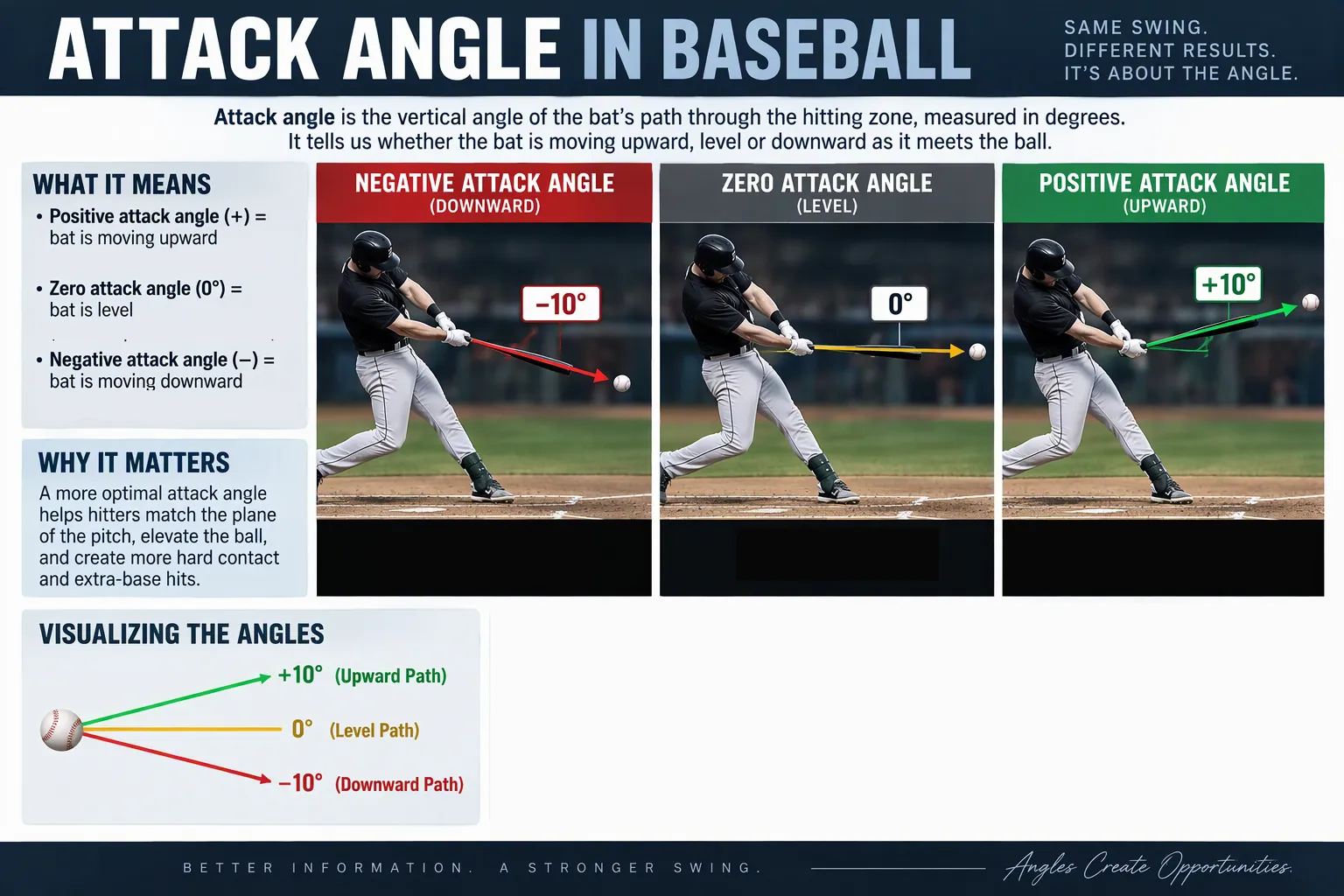
Attack angle is simply the relationship between the barrel of the bat and the hands as the bat moves through the hitting zone.
When the attack angle matches the pitch plane more effectively, hitters generally produce:
- More line drives
- Better launch angles
- Harder contact
- More extra-base hits
When the attack angle becomes too steep or too flat, hitters often produce:
- Weak ground balls
- Poor launch angles
- Rollovers
- Easy defensive plays
The tricky part is that two swings can feel identical to a player while producing completely different ball flight results.
That's why many young hitters struggle to self-correct.
The Fix That Finally Worked
I tried explaining it.
I used batting tees.
I used batting cages.
I told him exactly what needed to change.
Nothing worked.
Ground ball after ground ball after ground ball.
Then I accidentally discovered something interesting.
I put my younger son and older son on the field together with a tee.
My older son was consistently hitting line drives.
My younger son was hitting ground balls.
Within one practice session, something clicked.
He watched his older brother.
He adjusted.
He self-organized.
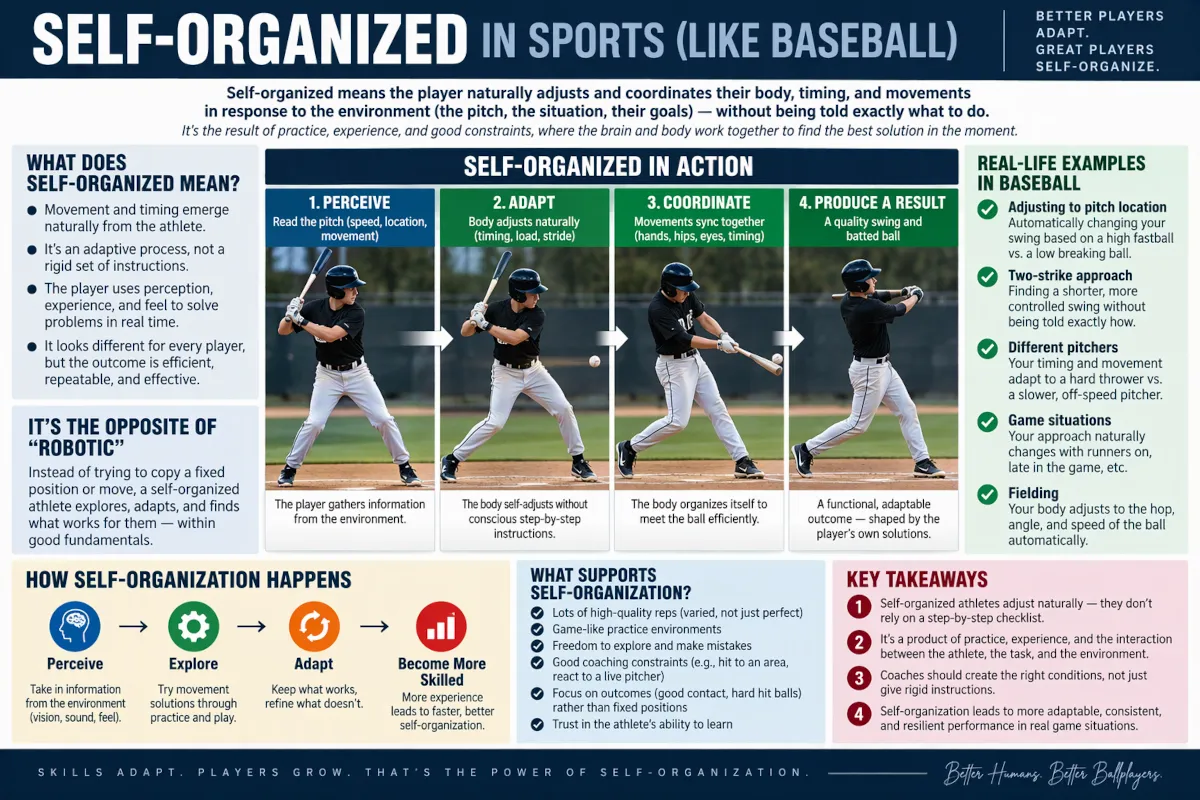
Without a complicated drill or endless instruction, his attack angle changed and the ball immediately began coming off the bat differently.
The line drives started showing up.
Why Many Youth Hitters Stay Stuck
This experience taught me something important about youth baseball development.
Often, players already know what they're supposed to do.
They just cannot feel the difference between what they're doing and what they think they're doing.
That's where video becomes powerful.
Most young players are shocked when they actually see their swing on video.
What they feel and what they're doing are often two completely different things.
How Parents Can Check for an Attack Angle Problem
If your child keeps hitting routine ground balls, I recommend recording game swings before making major mechanical changes.
Here's what to do:
For Right-Handed Hitters
Record from the first-base side so you can clearly see the entire body from feet to head.
For Left-Handed Hitters
Record from the third-base side with the same full-body view.
Use Slow Motion
Most modern iPhones and Android phones can record in high frame rates that allow you to slow the swing down and evaluate the bat path.
When reviewing the video, pay attention to:
- The barrel's path into the zone
- Where contact occurs
- The relationship between the hands and the barrel
- The resulting launch angle
- Whether hard-hit balls are becoming ground balls
Those clues often reveal more than watching the swing at full speed.
The Goal Isn't Always More Launch Angle
One thing I've learned is that there isn't one perfect attack angle for every hitter.
Some professional hitters use larger attack angles.
Others use smaller ones.
Different approaches create different results.
The goal for most youth players isn't necessarily to hit home runs.
The goal is to get the baseball out of the infield consistently.
More line drives.
More hard contact.
More opportunities to reach base.
That's a much better developmental target than chasing home runs at 11, 12, or 13 years old.
The Question Every Parent Should Ask
If your son is hitting ground balls all over the field, ask yourself:
Is this really a timing problem?
Or is it possible the bat path, attack angle, or launch angle is working against him?
That single question completely changed how I looked at my son's swing.
And once we identified the real issue, the fix came much faster than we expected.
Because sometimes the problem isn't when the bat arrives.
Sometimes it's the angle it arrives on.