Pitching ain't easy.
It takes practice. And a lot of it.
If you think you'll be good after a week, a month, or even a year, you're probably dreaming.
But I've read a lot, watched a lot, and taught my boys a lot. Here are a couple of quick things to get good.
2 Pitching Methods
There are literally 2 different pitching styles that I'll need to explain before diving in. Before I explain them, though, know that it's more of a spectrum. You probably won't be exactly one or the other.
- Tall & Fall
- Drop & Drive
The tall & fall seems to be a favorite of taller, lankier guys. While shorter or stronger players seem to gravitate towards drop & drive, honestly, it seems to be mostly preference.
I mention this to explain that I'll be going over the tall & fall method. So if you hear guys talk about dropping and driving from the back foot, know they aren't wrong. It's just a preference or style of pitching. I think the tall & fall is a bit easier to learn at first. You're using gravity more to pull you down the mound, which is basically free velocity, and you don't need to time the drive as much.
Tall & Fall
Tall & fall is the style where you stand straight up, fall towards home plate quite a bit, and allow gravity to pull you towards home plate. A lot of the power comes from gravity pulling you down the mound.
Paul Skenes is tall & fall.
Today, I'll be going over the tall & fall method.
Here are some of the most notable tall and fall pitchers in today's game:

Sean Hjelle (6'11"): Hjelle's entire profile centers around standing tall and generating an incredibly steep angle toward home plate.

Tyler Glasnow (6'8"): Glasnow utilizes an upright, high-three-quarters delivery that lets him explode downhill. His height translates into a massive stride and an intimidating release point. [1]

Paul Skenes (6'6"): The Pittsburgh Pirates ace has an absolute powerhouse frame. You'll notice he falls quite a bit down the mound.
How "Tall and Fall" Advantages Modern Pitchers
The motion: The pitcher maintains a taller, more upright posture through the peak of the leg lift and allows gravity and the slope of the mound to pull them forward.
How it generates power: It relies on rhythm, balance, and downhill momentum rather than an aggressive, muscular push from the back leg.
Best suited for: Lighter, springier, "twitchy" athletes with longer levers.
The Leg Lift
This is where the tall & fall vs drop & drive start to differ.
I've heard guys like Nolan Ryan say the higher the leg lift, the faster he pitched, but I've seen kids throw heat without a leg lift. But the height of the leg lift might be very important.
To follow the tall & fall method, you'll want a high leg lift. The higher, the better.
You don't want it so much that you're off balance at the peak of your leg lift, but you'll hear guys talk about how you should be able to hold your peak leg lift for a while... Those are drop and drive guys. Tall & fall cannot hold their leg that high. It's not that they are falling over; it's that you're pulling your leg up fairly quickly, and the momentum of that pull is past the point where your body can hold the leg in place.
You're really using your leg for a lot of speed.
The Drift
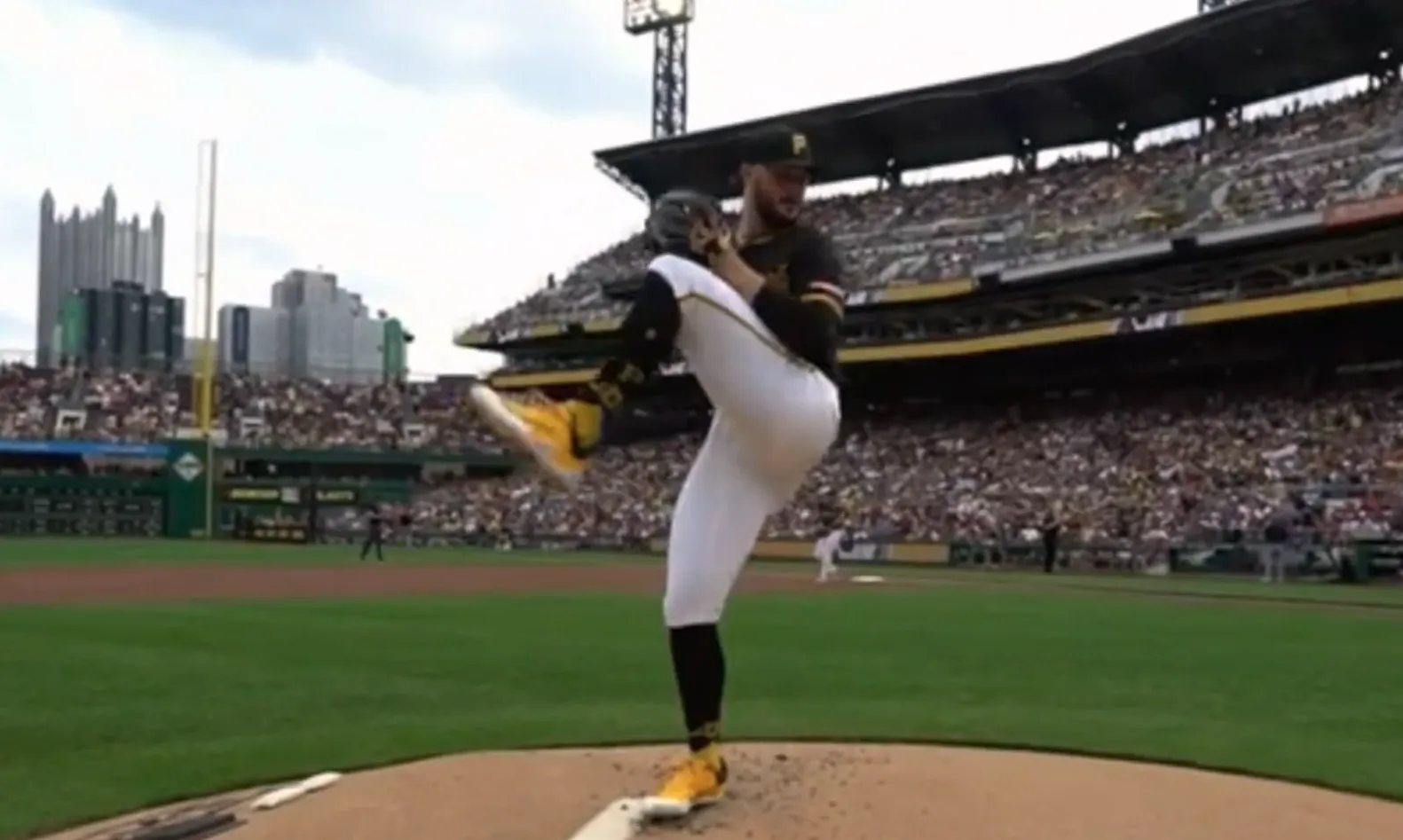
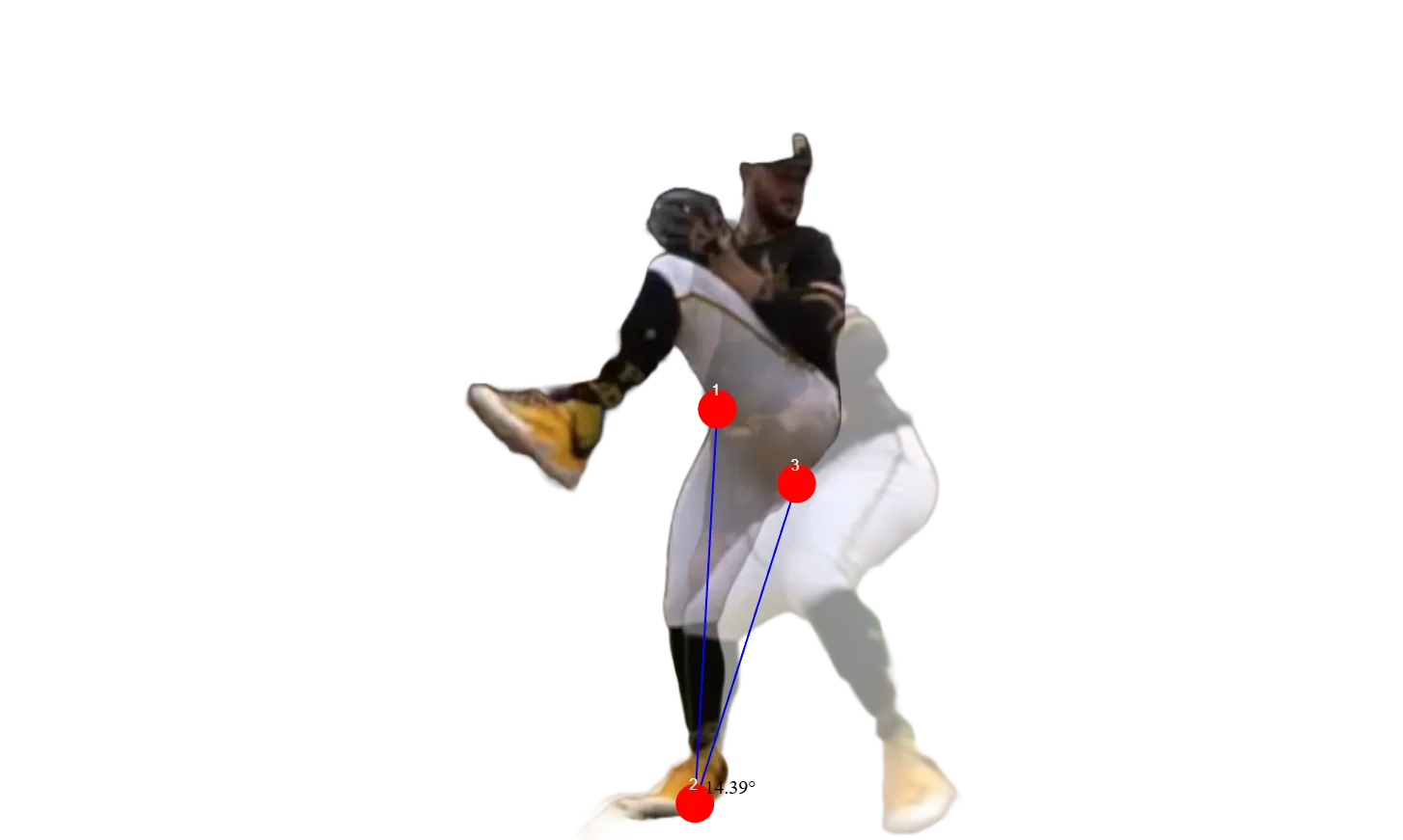
Next, you want to "drift" towards home plate with your hips. If you skip this step, your front foot will become disconnected from the rest of your body, and it looks like you're "stepping over a creek". In short, move your hips slightly towards home plate, taking you off balance, so your whole body starts to move towards the plate. Paul Skenes does this very well. The angle of these two images kind of stinks, but you can see how far Skenes falls down the mound. He's moved about 15 degrees from when he starts to drift until his front foot is about to cross in front of his butt.
The Stride
This is where things get a little complicated. You want to move your front foot towards home plate as quickly as possible while the rest of your body continues to fall towards the ground. You don't want to sit back so much as drop-and-drive guys do. With tall & fall, you want everything moving towards the plate. You can see Paul Skenes here moving his butt towards home plate and less towards 1st base.
Your front foot won't be moving directly towards home plate because it will work as a counter-balance to your butt, but it doesn't fly towards 3rd (or 1st for lefties) as drop and drive guys do.
Lastly, lead with your heel and only turn your toes toward home plate at the last possible moment.
The Throw
Now you want to yeet the ball as fast as you can towards home plate.
You want your arm working as a bit of a whip here. You don't want to push the ball. If you push the ball, all the momentum of the rest of your movement is wasted. Rip your elbows back, turn your arm over and throw the dang ball.